Paint Correction Before Ceramic Coating: Why the Order Matters
Coating over swirls doesn't hide them, it locks them in for years.
September 27, 2026 · 4 min read
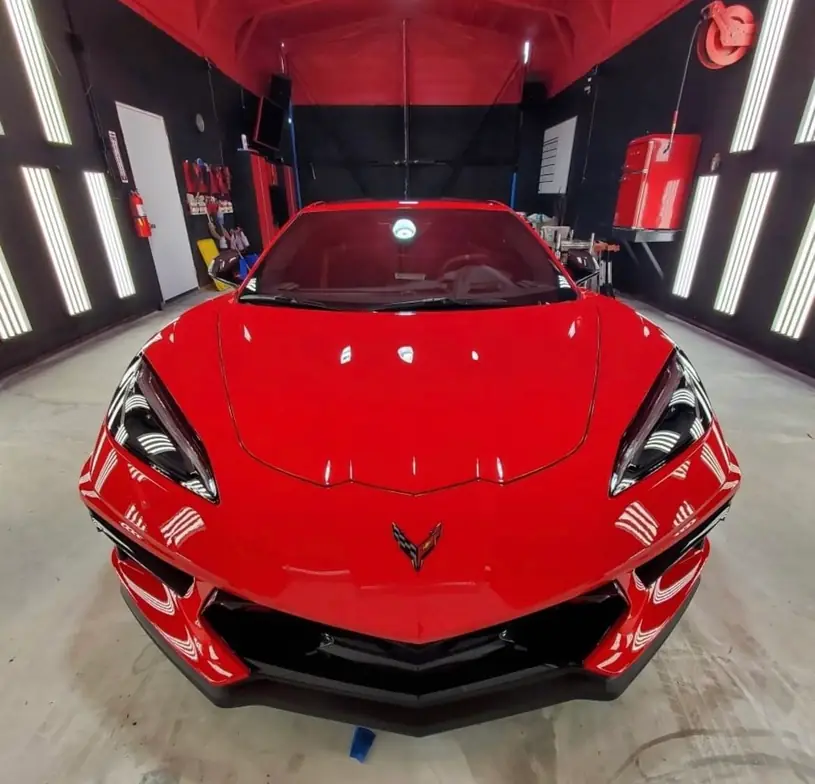
A ceramic coating is permanent, or close enough to it that you shouldn't think about it any other way. Once it cures on top of your clear coat, whatever was on that paint the day it went on is what you're looking at for years. That's why the order of operations matters so much, and why skipping straight to the coating is the single most common mistake we see in cars that come in for a redo.
What the coating actually seals in
A ceramic coating doesn't fill in scratches or hide swirl marks. It's a thin, hard, glossy layer that sits on top of whatever texture is already there. If the clear coat underneath has fine swirls from years of automatic car washes, or light scratches from a dusty microfiber towel, the coating just sits on top of them and makes them easier to see, not harder. Glossy, water beading paint reflects light more sharply than dull paint does, and sharp reflections show flaws that used to blend into a hazy finish.
That surprises a lot of owners. The assumption is that a coating is a kind of armor that smooths everything over. It isn't. It's closer to a very good coat of varnish on a table. If the wood underneath is scratched, the varnish makes the scratch shinier, not gone.
Why correction has to come first
Paint correction is a machine polishing process that levels out the clear coat so those swirls, scratches, and water spots are actually removed rather than covered up. It's done in stages, starting with a compound that cuts more aggressively and finishing with a polish that brings back the gloss, and it has to be checked under bright, direct light at every stage. Shop fluorescents flatten reflections and hide exactly the kind of light marring you're trying to catch, which is why a proper inspection happens under strong, direct light, not just under the ceiling.
Coating over paint that hasn't been corrected locks those marks under a layer that isn't wiping off with a microfiber towel. If you decide later that you want the correction done properly, the coating has to be cut through first, which adds labor that wouldn't have been necessary if the sequence had been right from the start. Getting this right the first time is the cheaper path, not the more expensive one.
What a proper pre-coating inspection looks for
- Swirl marks and fine scratches visible under direct light, not just indoor lighting
- Water spots or mineral deposits baked into the clear coat from air drying
- Light oxidation or dulling on paint that hasn't been correctly maintained
- Any contamination on the surface, like tree sap, tar or rail dust, removed with a clay bar or chemical decontamination before polishing starts
Every one of those has to be dealt with before the coating goes on, because the coating is not a corrective step, it's a protective one. It's there to make the paint easier to keep clean and to help it resist UV, chemical staining and water spotting going forward, not to fix what's already wrong with it. It isn't scratch-proof either, so the surface it's protecting needs to already be right.
Getting the order right
If you're planning to have a vehicle coated, ask what the correction step actually involves before you book it. A quick one-step polish and a full multi-stage correction are very different jobs, and only one of them actually removes marring instead of masking it for a week or two. The paint should be inspected under real light, corrected in stages, and confirmed swirl free before any coating goes on top of it.
What correction can't fix, and what to expect afterward
Correction levels the clear coat, it doesn't replace it. Deep scratches that have gone through the clear coat into the color layer underneath usually need paint repair, not polishing, and a good inspection will tell you which one you're dealing with before any buffer touches the car. It's also worth knowing that correction removes a small, controlled amount of clear coat, which is why it isn't something to repeat every few months. Done once, done properly, and followed by a coating, it should hold up for a long stretch of normal driving and washing.
Once the coating is on, keep expectations realistic too. It makes the surface easier to keep clean and the water bead off faster, but it's not scratch-proof and it's not a substitute for careful washing. A hand wash with a clean mitt still matters after the coating goes on, the coating just makes that wash easier and the results last longer.
We do paint correction and ceramic coating in that order, every time, at our shop on Budde Rd here in Spring, serving The Woodlands and the surrounding area. If you want to know what your paint actually needs before committing to a coating, call us at (281) 364-9274 for a free estimate and we'll take a look under the light with you.
Dr. Detail Ceramic Coatings, (281) 364-9274
Call (281) 364-9274